kindness

Sussex will never be the same. But we stand together

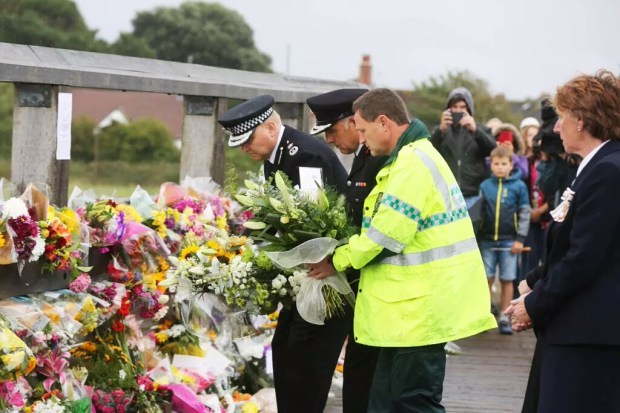
Saturday 22 August 2015, lunchtime. I’m looking forward to football – Brighton and Hove Albion v Blackburn Rovers. We got back from holiday last night. Steve has gone to Storrington via the A27 near Shoreham Airport to collect William from his cattery. They should have been home an hour ago. I notice via Twitter that there has been an incident at the air show affecting the A27. Slight anxiety till husband and cat return.

At 2.15 I set off on my bike to the Amex. The air is warm and still, the roads empty. At the stadium, we learn that kick – off will be delayed as the A27 at Lancing is shut both ways. Several thousand spectators fail to arrive. We win, not especially well. People keep checking their phones for news.The atmosphere is muted. Son, 28, hugs me spontaneously.

It is only the next day, as estimates of the number who may have been killed keep rising that the enormity of that Saturday moment really begins to sink in.

As I go about my Sunday, I think of those anxiously awaiting news. The names of two 23 year olds are released as the first to have lost their lives.They were semi-pro footballers at Worthing United, en route to a match in Loxwood. One was an Albion employee, both were Albion fans. Tony Bloom, our chairman, loses his composure as he pays tribute to two lovely boys. There will be many mothers like me feeling guilty for being thankful we have no-one missing.

Monday 24 August. On the Today programme, John Humphrys allows his exasperation at the dissembling of an aviation authority representative to get the better of him. He refers to the German Wings incident and talks of “Mad people getting into the cockpit”. A gratuitous, stigmatising link. I recall an appearance myself on Today earlier this year to challenge the German Wings coverage.

A planned day out with a friend to celebrate our 60th birthdays starts with an exhibition at the Imperial War Museum. The poignancy of the loss of young lives catches me unawares.

Much later on my way home, I check the BBC website. There are now six named dead or missing, at least five more to come. The A27 will remain closed all week. The West Sussex Coroner calls for patience; the scene of devastation is beyond comprehension, and identifying the bodies is painstaking work.

Tuesday 25 August. The national media has moved on. But Radio Sussex and our local paper The Argus continue to dedicate much space to the incident. The reporting is beautiful in its sensitivity and as far from sensationalist as you could hope. Careful attention is paid to those already known to be lost, those waiting for news, the ones involved in the clear up and local people who are just shocked and stunned. MP Tim Loughton does what leaders should in times of crisis and is present, calm and thoughtful in his comments. The police, ambulance, fire and rescue teams and volunteer helpers are heroic. The NHS is doing what it does best, saving lives, or trying to. News of the pilot isn’t good but people pray for him. There is no finger pointing. But there are understandable queries about whether vintage planes should be used in air displays over built up areas. The Shoreham Airshow as we know it may be no more.

We all have mental health. Events such as these don’t cause mental illness. But they affect our wellbeing in many ways. It’s wonderful to see Sussex Partnership and the rest of the NHS offering advice and help to those who need it.

And I’m pleased to see my friend Daniel from Brighton, Hove and District Samaritans speaking about voluntary support, including Samaritan volunteers who have been making themselves available to talk to distressed folk paying tribute to the dead. I can think of no-one better placed in such circumstances.

Thursday 29 August. This morning, two days after posting the original version of this blog, I get a call from Radio Sussex. They are doing a programme on Saturday lunchtime live from Shoreham Footbridge to pay tribute to all those who have died, been hurt, have helped in the clear-up or been otherwise affected in any way. Presenter Neil Pringle has suggested they ask me to appear in the programme. I couldn’t be more honoured. I will do my best to say things that will help people.

These are troubling times. Sussex has been dealt a body blow. How can we all help one another? By standing together, being patient, thankful, hopeful, and relentlessly kind.


Nobody said it was easy…

My last blog was about the launch of the Time to Change project, working alongside two volunteer mental health trusts to tackle the stigma within mental health services. It got lots of positive comments. And a few negative ones.

In the interests of improvement, I thought I’d share the latter, see what I can learn from them and also offer my response.

The comments fall into three broad categories.

1.People who do bad things need calling out. That is the essence of accountability. This project ducks the issue.

I understand what you mean. And I agree. If someone has done something wrong, they should account for their actions. That is what any fair and just system is based on.

But…We are talking about attitudes. And it isn’t possible to change these by telling people they are wrong. And shaming or even punishing them. It doesn’t work. It can actually entrench those attitudes.

The Truth and Reconciliation Commission in South Africa recognised this. It sought to use compassion and forgiveness to build bridges between groups who had done terrible things to each other. Archbishop Tutu used the learning from this work to build his worldwide Tutu Foundation, which teaches mediation to troubled nations and groups. Underpinning it all is his belief that people are made for goodness.

Time to Change has worked on this basis since 2007. They use facts and compassion to help change attitudes. They have had significant, measurable success. This project is no different. Facing up to what is wrong is not ducking the issue. It is honest and truthful and has taken huge courage. Changing things requires sensitivity and compassion. And that’s how we will be working.

2.Teaching staff about mindfulness and compassion is bollocks. It doesn’t work. There is a “happiness industry” out there ripping public services off and laughing all the way to the bank.

I use mindfulness myself, and am proud that my ex-colleagues at Sussex Partnership have been offering mindfulness-based CBT and mindfulness meditation to patients and staff on an increasing basis for the past 5 years. It does work. There is a large evidence base.

But I agree it is not a panacea. Nor does it work for everyone. Mindfulness doesn’t fix poverty, a housing problem or unkind treatment from someone else. What it does is enable you to control your emotional response to such challenges and not allow them to define you.

Our project will use a range of methods to help staff bring their whole, most compassionate selves to work. It won’t duck from identifying the cultural, organisational and external factors which affect the delivery of compassionate care. And this won’t be easy. But we are determined not to paper over problems.

3.Someone like you (me) who has had an occasional bout of depression has no idea about the stigma of serious mental illness. Thinking you are helping by disclosing your own experiences is self indulgent shit.

You have touched one of my rawest nerves. I shared your view for many years, which was why I kept my depression to myself. Added to that, I truly didn’t believe what I experienced from time to time was depression. I thought of it more as my own moral weakness and laziness. Words like self-indulgent were designed to perfectly describe me.

But now I’ve had some really effective therapy. I’ve learned that I’m not a bad person. And that my response to distress and dissonance is to turn in on myself with self-hatred that is greater than anyone else can ever feel towards me. I become my own worst enemy. This is a major aspect of my depression.

It is true that I don’t have the longterm effects of an illness such as schizophrenia to contend with. But just because I’ve managed to muddle through my life and have achieved a few things despite not infrequent bouts of depression doesn’t mean it has been easy. Judging me for not being more disabled is pretty sick, when you think about it.

So I’m going to continue being open about what I do to try and stay well, which I am at the moment, and about what it’s like when I’m not. And I’m going to listen to the thousands of people who have told me that coming out has helped them be more open. Rather than the handful who judge me as self-serving.

At least, that’s what I will try to do.

I’m looking forward to sharing these thoughts with members of the project working group and to hearing their own experiences and challenges. I’ll keep you posted on how we are doing.

And my final thoughts? Nobody said this project was going to be easy. But nothing worthwhile ever is.

No them and us. Only we

Some people call antidepressants “happy pills”. I’m not keen on this description. In my experience, they slice the top and bottom from my emotional range and I feel neither happy nor sad. Instead, they bring a calm which is welcome but can leave me feeling blunted, even flat. I know others describe similar effects.

Antidepressants helped me go back to work very quickly after my breakdown in November 2013. Skilled care from my psychiatrist and GP, timely psychological therapy, and the kindness of colleagues helped even more. Plus an over-developed work ethic. For those lucky enough to have decent jobs, going back to work and feeling useful can play a big part in our recovery.

I mention this because I want you to understand my state of mind on 24th February 2014, 6 weeks after I went back to my job at the time, running a mental health trust. Going back to work was probably the hardest thing I have ever done; one day, I hope to feel able to share why.

Anyway, on this particular day, I attended a round-table event arranged by Time To Change. Had I not been on my medication, I might have felt the need to challenge what we were being told. Or wept. Because I and the other NHS leaders present heard stuff at that meeting that we desperately wanted not to be true. And yet deep down we knew it to be so. It was like learning about institutional racism. Only this time, it was institutional stigma and discrimination from the services we were responsible for towards people who use our services.

We heard that, despite the measurable shifts in attitude of the general public (published in July by Time to Change for 2015 and again showing small but significant improvement), attitudes within the NHS haven’t shifted. In some cases, they have got worse. And the places where they appear most entrenched, as reported by those who know, ie patients, are within mental health services. And it rang horribly true.

From this meeting was born a desire amongst a number of us to do something to change this. Five months later, at my retirement party, I listed some of the things I planned to do with my new free time. One of them was to offer my services to Time to Change to help tackle this intrinsic issue within mental health services. And although I planned to earn a modest living writing, speaking and coaching others, I wanted to do this work as a volunteer. I felt I had something to pay back.

It has taken time to set up the project. But now it is underway. Time to Change are working with two mental health trusts, 2Gether and Northumberland, Tyne and Wear. Like me, they are volunteers. The trusts were selected because they could demonstrate their readiness at the most senior level to address stigma within their own services with integrity, hard work and, most importantly for me, compassion. On the working group, which I chair, we have reps from the two trusts, four experts by experience, our full time project manager, senior colleagues from Rethink and Mind who together are responsible for running Time to Change, and two people from a social research company who are doing the work on attitude measurement.

You can read more about the purpose  and details of the project here on the Time to Change website, including quotes from those taking part.  And Community Care have published a piece about the project today.

Stigma towards those who need mental health support is alive and kicking within the NHS. It manifests itself with lack of empathy towards those who self harm or are otherwise in crisis, as described in the recent CQC report; low expectations from clinicians about future prospects for people who experience serious mental illness; lack of investment in research into new treatments; marginalisation of mental health in the way the NHS is planned and organised; and unfair treatment of mental health services by local and national commissioners in their expectations and funding decisions.

But I have high hopes. There is an absolute acceptance amongst those involved in our project that things need to change. And that instead of simply asking people who work in mental health to be more compassionate, that the change needs to start at the most senior level. We have sign – up for this work from the very top of NHS England, Mind, Rethink, Time to Change and at the trusts. And we agree that for staff to work respectfully with patients and treat them with optimism, expertise and compassion, they need to experience the same from their colleagues, including their most senior leaders, their commissioners and their regulators.

It was a long time ago that I was told by a nurse that I was a waste of space and that looking after me after I had hurt myself took him away from patients who were truly deserving of his care. At the time, I absolutely believed him. It took me many years to unlearn what he said. And it nearly broke my heart to hear, at that meeting back in February 2014, that such attitudes are still relatively commonplace today. The difference now is that we are talking about them. And acknowledging a problem is the first and most important step towards solving it.

Please don’t just wish us luck. Please join in and help us tackle stigma towards people like me and millions of others who experience mental illness from time to time. I’ve been off my antidepressants for several months now. I feel like the whole me again, which has one or two negatives but is mostly pretty amazing. And whilst I am doing lots of things to look after my mental health in my new world, who knows if I will need treatment from mental health professionals again one day?

Because there is no them and us. Only we.


Let’s not rush to judgement over Kids Company

I haven’t read every article on the demise of Kids Company. But I’ve read a few. They seem to fall into two categories: how terrible that this should have been allowed to happen. Or that its founder and chief executive Camilla Batmanghelidjh had it coming.

The truth will invariably lie somewhere in between.

I saw Batmanghelidjh speak at the NHS Confederation Conference a few years ago. I was an independent director of the organisation and felt uncomfortable, not so much for the paucity of her delivery (she read her speech of mostly incomprehensible psycho-babble and didn’t connect with what should have been a supportive audience) but more because of her intemperate, unjustified attacks on the services provided by some of our members. They had no right of reply. Nor did they enjoy her freedom to act outside clinical guidelines or good governance.

The following year I met a member of her executive team at another event. Again, psychological gobbledygook was passed off as groundbreaking work. The speaker couldn’t enumerate how many young people were being helped or what this nurturing cost or even consisted of. But she urged us to meet Batmanghelidjh, and appeared to be more than somewhat in her thrall.

I also read a recent leadership article in which Batmanghelidjh spoke in her own words of her legendary poor administration skills, how she needed not one but 5 PAs to keep her organised, and that her office was an extension of her large, warm personality and had been decorated accordingly. The photographs supported this and I recall wondering who had paid for the extraordinary artwork and upholstery.

I have been a trustee of several charities. And it doesn’t matter how small or niche you are, the first rule is that you must follow the rules of the Charity Commission and work towards creating a surplus which will act as a cushion should something go wrong with your funding or some other disaster occur. Small charities should have at least 3 months operating surplus available in cash, larger ones a minimum of 6 months. Why the trustees at Kids Company thought they were exempt from such sensible precautions is hard to say. Alan Yentob and the other trustees must carry a considerable burden of responsibility for the sudden collapse of this high profile charity.

Many people are rushing to put the boot in, as well they might given the patronage Batmanghelidjh enjoyed from senior members of the government and warm-hearted celebrities. This is no doubt fuelled by jealousy because she was such a smart operator. The sight of her continuing to attack and blame dark forces for her fall from grace throws some light on how she used guilt and guile to attract money for a cause that most of us struggle with,  i.e. the mental health of children and young people.

Nevertheless, we need mavericks like her. She may have been economical with the truth about how many young people Kids Company helped. And what they did there may have been less than mainstream. But she has highlighted that there are young people that traditional services are simply not reaching, and that these services are in any case stretched beyond all limits. For that we should applaud her efforts.

I hope that the young people Kids Company helped will find support elsewhere. And that we all wake up to the fact that, if we don’t invest significantly in the mental health of our young people, we are setting the whole country up to fail.

Camilla Batmanghelidjh and others at Kids Company should be considered on their record. Let’s wait for whatever reviews that eventually come out, and not judge any of them, kindly or harshly, until then.


If I ruled the world…

In a previous life, I ran a mental health trust for 13 years. It was really hard, but it brought some influence to bear on something that matters very much, i.e. the experiences of 1:4 people, who, like me, are sometimes mentally ill.

In 2010, as Chair of the Mental Health Network, I shared a platform with Health Minister Paul Burstow, Paul Jenkins, then of Rethink, Sarah Brennan of Young Minds and others at the launch of the coalition government’s mental health strategy No Health Without Mental Health. In 2013, I met Norman Lamb (who took over the ministerial role in 2012) and a few other senior colleagues to discuss why it was that the strategy hadn’t completely worked, in our opinion. The shocking evidence of widespread disinvestment in mental health services was by then becoming clearer, rigorously uncovered by investigative journalists Shaun Lintern (HSJ), Andy McNicholl (Community Care) and Michael Buchanan (BBC). Who are heroes in my opinion.

In times of plenty, mental health services have received at least a small share of extra resources available. Professor Louis Appleby’s excellent National Service Framework was delivered from 1999 – 2009 through increased investment in crisis services, early intervention and assertive outreach teams. And it was strictly monitored. Commissioners and/or trusts who thought they knew better than the best evidence of what underpinned compassionate, effective care for people with serious mental illness were found out and given no option but to improve. The architecture that did this monitoring has since been dismantled. We are left with regulation, inspection, adverse incident reporting and stories in the media.

The pressure by local commissioners on providers to swallow the current disinvestment medicine is considerable. Mental health leaders who make a fuss are viewed as lacking loyalty to their local health system. Were the same cuts made to cancer or heart services,  there would be national uproar.

This tells us something, which is that stigma towards the mentally ill is alive and kicking within the NHS.

A true story: the other day, I mentioned the wonderful Alison Millar’s Kids in Crisis  programme to someone senior from NHS England. I could tell they were irritated to be reminded that very sick children are currently languishing in police cells or being shipped hundreds of miles around the country while desperate clinicians spend hours trying to find a bed. This person actually said that parents are prepared to travel all over the world looking for the best treatment for conditions such as cancer. So why should CAMHS be different? When I reminded them that this wasn’t about highly specialist care, just access to care anywhere, they blamed the failure on local services and moved on to share their insights with someone else.

So we have denial about the impact of disinvestment, as well stigma. And I realise that in my new freelance world, I have a different sort of influence.

Thanks to Paul Jenkins, now CE of the Tavistock and Portman Trust, for his blog this week on the paucity of investment in mental health research. Another example of how stigma is flourishing towards those least able to argue for resources. And to Andy McNicholl for his piece on the bed crisis in adult mental health services, mainly caused because people are being hospitalised when other services have closed, or there is nowhere safe for them to go when they are ready for discharge.

Regarding the NHS Five Year Forward View (5YFV) here’s my 6-point plan for making mental health more mainstream. With measurements. Because if you don’t measure, you can’t manage.

1. Suicide prevention

Make suicide prevention the business of every citizen of the UK. Stop blaming mental health trusts and their staff for failing to keep people alive. The responsibility is much broader than that. Locate suicide reduction planning with Health and Wellbeing Boards. Make it their number one priority, with proper support as well as sanctions for lack of progress.

2. Mental health within the NHS

Expect every provider and commissioner to make the care of people who happen to experience mental illness their explicit business. Start with primary care. Require every NHS employee, including reception staff and everyone who works in a commissioning organisation, to do a minimum 1/2 day training, with an annual update, delivered by experts by experience. Report on compliance via the annual NHS staff survey.

3. Integration

Require local systems to produce integrated commissioning plans for all primary and secondary services. Particularly crisis care; dementia; all major physical conditions such as heart disease, strokes, obesity, diabetes and cancer; neurological conditions such as MS and MND; and musculo-skeketal conditions including chronic pain. Draw on the RAID model for measurement. Allow organisational form to flower according to local need. But also require investment in integrated services through an annual reduction in organisational overheads, and increased investment in the third sector.

4. Public health

Reduce premature death rates in people with serious mental illnesses of up to 25 years by making mental health promotion core business for primary care and secondary health providers in the statutory and non-statutory sectors. Target supportive, evidence based obesity reduction, smoking cessation, substance misuse harm reduction and exercise programmes for people with diagnoses such as schizophrenia, bipolar disorder, PTSD and personality disorder. Set ambitious targets over the next 25 years and monitor hard against them to help turn around the life chances of some of the most marginalised people in society.

5. Making the business case

It is up to the NHS to articulate and prove the business case for a change of approach in welfare for people with long term conditions such as serious mental illnesses. Commission the best brains eg Professor Martin Knapp at LSE to put the evidence together. Which is that it is considerably more costly as well as more cruel to condemn people who experience mental illness to poor, insecure housing and limited, insecure income, and for them to appear frequently and often pointlessly within criminal justice services.

But these costs do not occur in one place. Creating exciting opportunities for engagement and volunteering such as The Dragon Cafe can help people move from being recipients to full participants. Placing employment specialists within mental health teams and incentivising pathways into work are also proven to be highly successful. The alternative, i.e. penalising those in need of help, is counter-productive. It forces people to have to make themselves appear less able, makes them reticent about coming off benefits for fear of never getting them back should they need them in the future, as well as being extremely detrimental to their long-term well-being.

6. Research and improvement

Shine a light on why so little is spent on mental health research, given the financial and life chance costs of mental illness. Do something serious ang longlasting to reverse this. And then measure the impact longditudinally. No-one says we’re spending too much on cancer research, do they? Use that as our benchmark.

AND listen to the eminent and brilliant Professor Don Berwick, who makes the point that inspection never improved any health system. We need to invest in improvement science, architecture and skills for the whole NHS, of which mental health is an intrinsic, integrated part. Calling something NHS Improvement doesn’t necessarily make it an improvement body, by the way. But it is a good start.


I’ve shared these thoughts with the fabulous Paul Farmer, CE of Mind, who is leading one of three national task forces set up to help deliver the NHS England 5YFV. The other two are on cancer and maternity care. I know he wants to do the best he can. But he needs your help.

If you are part of the mental health family, and I would argue that every human being should be, please join in. Let’s seriously increase our ambition for those of us who experience mental illness, and focus hard on a small number of really important things that will really change lives. And then let’s concentrate and not squabble amongst ourselves as we set about achieving them.

That’s how winning teams win, against all the odds.

Don’t be mean*

In my blog last week, I mentioned that my next one might be contentious. This is it.

Tonight, Health Service Journal (HSJ) have announced their inaugural list of Patient Leaders.

I am stunned to be on it. Plus a little bit anxious and also prouder than I have felt for a long time. Here’s why.

I’ve been on a few lists in my time. I remember the first one of influential women in the NHS. Some of us got a bit of stick for that, as did HSJ – “What about the influential men?” came the cry. Take a look at the top of the NHS, and you will see why there is a need for a list with just women on it. Even more so for Black and Minority Ethnic NHS leaders. Hats off to @NHS_Dean who has been open about changing his mind recently regarding quotas on Boards. It’s not too late to join him.

There are many other reasons why such lists can cause controversy. One is that they seem to include all the obvious people, who have reached positions of influence “just” by the nature of their jobs. Who have apparently been in the right place at the right time. Whose mistakes haven’t yet caught up with them. Or who are lucky enough to have a face that “fits”.

I’ve been there and even made such remarks. And I know that, although doing so might have made me feel better about not being on some list or another myself, it also introduced a tiny chip of meanness into my heart which I then had to work very hard to eradicate. Or it risked undermining me and any future good I might bring to bear.

To the people who are feeling mean about this latest list, I say this. Yes, some of the names on it may seem obvious to you. But only they know the personal cost of being there. And yes, there may be some, me included, who are relatively late entrants to the patient leadership world. But that doesn’t make them, even me, unworthy, nor does it in any way diminish the extraordinary contribution of those who have been doing this labour of love for much longer than the rest of us.

Being a member of an exclusive, perhaps even excluded club may feel good, especially one whose purpose has been to act as a ginger group. But patient leaders are doing work that is too important to remain on the outside looking in. One day, and I don’t think it will be all that long, we will see experts by experience appointed into paid leadership roles right across the NHS and care system, as a matter of course. We must of course protect their independence. But we must also stop seeing them as an optional, expensive, fortunate and patronised extra.

There is nothing I did throughout my 41 year NHS career that was harder than sharing my own experiences of mental illness, facing up to going back to work after my last episode of depression, and then retiring, I hope with dignity, to forge a new career as a writer and mental health campaigner. I know it will have been equally hard for others to have followed their personal, not always chosen, path.

So let us warmly thank EVERY patient and carer leader for the courage, wisdom, creativity and generosity they bring to improve our less than perfect, still beautiful, deeply precious NHS. And to all those on tonight’s list, here’s to you. I feel humbled to have joined your extraordinary ranks.

*With thanks to the extraordinary Kate Bornstein, whose philosophy on life is “Do whatever it takes to make your life more worth living. Just don’t be mean.”


Why do you blog?

I’ve been collecting questions and comments about blogging recently. Here are some of them, with my thoughts. I’d love to hear yours.

1. Why do you blog?

This is a bit like asking why do you breathe. Because I have to. I’ve always used writing to explore ideas and work out what I think. And I’ve always shared it. Blogging is just the latest way to do this. There will no doubt be others.

2. I don’t know how you find the time

Writing a blog doesn’t take as long as you might think. Also, I no longer have a full time job – although I found it helpful to write a weekly blog even when I did. Nowadays, there are other things I don’t do as much of as perhaps I should. Such as finishing the book I am writing…

3. There are so many blogs. I don’t have time to read most of them

No one expects you to. There are also many millions of books, articles and other forms of writing. Some of us have voracious appetites for reading. Others are more choosy. Both are OK, as long as you don’t only read things you know in advance you will agree with. Reading is meant to broaden the mind. And make you think.

4. How do you know if people read your stuff?

This is why blogging is so great. Back in the day of articles appearing in print only, you might know how many people had bought the newspaper or journal. But you’d no way of knowing who had read your piece. With online blogs and articles, at least we now know exactly how many have opened it, even how long they have lingered there. Although whether they actually read it remains their private business!

5. What if no-one reads your blog?

That’s OK. I have had blogs that were looked at by 1,000 people within a few hours, and others which struggled to reach 200 people over a whole week. It can be hard to work out which will be which in advance. It helps to consider whether the title is appealing, and also whether I am saying something original or even interesting; sometimes only clear with hindsight! The ones that seem most popular tend to be when I write about something that other people might have wanted to say, but were too scared to. Or where I talk about my personal experiences of difficult stuff, and what I have learned.

6. I’d like to write an opinion piece but I’d hate to get some of the horrible feedback I’ve seen you getting

This is interesting. At first, the online mauling of people like me who express their views can be distressing. There is something about the ability to be anonymous or apparently unaccountable that makes some people behave in destructive, even vicious ways. I heard Stephen Fry on Desert Island Discs say that he now tweets but never reads the tweets of others.  That is really sad. I’m similar to him in two respects: I experience depression from time to time. At those times, there is nothing anyone can say about me that is bad as how I view myself. And when I am well, I have in the past found it almost unbearable when people have criticised me. But…If you ignore negative feedback, you miss learning something.  I’m slowly improving at rolling with the punches, and just tuning out the most obviously horrible responses. Increasingly I see myself as an incomplete project that I need as much help with as possible. This makes everything about being alive so much easier.

Also, my wise friend @AlexYLDiabetes tells me that the 80:20 rule should apply, i.e. at least 20% of people should actively object to what you are saying. If they don’t,  you are being bland or populist. Thanks Alex,  as you know that has been a stunningly helpful insight. Particularly as my next blog after this one might be quite contentious…

7. I’ve been told I should blog but I’m anxious about getting started.

No-one should tell you what you should do. It is your decision. But given that you might want to try blogging, I will just say this. All new things are scary. I have had palpitations just before pressing the Publish button on quite a few occasions. This was one and this was another. It is when you stick your head above the parapet and say what people might not be expecting that you will get the most reaction. I like it when I manage to articulate what others have been thinking but haven’t got round to saying yet. And I like it even more if I can help people to formulate their ideas. If you think you might like these things too, please do have a go.

8. How does blogging make you feel?

Mainly happy. I honestly love it. As I do discussing ideas face-to-face, reading and hearing what others have to say, finding my thoughts shifting, and finding ways to explain what I think through the powers of story-telling.

And I love online conversations, especially on Twitter, which is made for ideas. As well as pictures of cats.

William in the garden

William in the garden

Please don’t walk by on the other side

Suicide is one of the last taboos. So much so, that some internet service providers (ISPs) block websites that name it, for fear they are pro-suicide or that just mentioning the word may somehow encourage it. Even my little blogsite has been affected. Thanks to those who told me about two ISPs who were blocking me, and to BT who fixed it fast. And thumbs up to Virgin Media whose initial excuses were unimpressive, but who sorted it out eventually.

I was thinking of the taboo of suicide when I met some wonderful people in Devon recently. Some had been directly affected by suicide, such as the couple who lost their 18 year old son in 2011 and now campaign to raise awareness, and promote a young people’s helpline and two excellent training courses, Safe Talk and ASIST via suicide prevention charity Papyrus. Some were like me and experience suicidal thoughts from time to time. And some were just good, kind people who help others in their chosen careers or as volunteers. They are all part of the South West Suicide Prevention Collaborative.

I shared some of my personal story with them and why I believe now more than ever that preventing suicide is everyone’s business. It is definitely not just the responsibility of staff who work in mental services, who can get blamed for not keeping someone alive, rather than praised for all the times that they have. Staff need support at such times because they feel devastated at the loss of a patient who they care about deeply. How can we expect them to be compassionate to others if we treat them with so little compassion?

Actually, this applies to all of us. Telling people who work in public services to be more compassionate while treating them without dignity, respect or kindness is the ultimate irony. And yet it is played out in many places every day. Including much of the media.

I said something at the event that isn’t currently fashionable. I don’t think it is is possible to prevent every death by suicide. But I do think that we can do very much more IF we make suicide prevention the business of families, friends, neighbours, schools, workplaces, all public services rather than just the obvious ones, the media, shops, cafes, bars, the voluntary sector, faith groups, social groups, sports clubs…everyone. And if we talk about it with more understanding and less rush to judgement, I believe we will gradually lose the taboo. But we still have far to go.

It isn’t just those of us who experience mental illness who think about killing ourselves. Death of a loved one, job loss, other sorts of loss, crippling debt, loneliness, isolation or an overwhelming sense of hopelessness about the future can all be causes. One of the people at the Devon conference spoke bravely about the corrosive impact of the downturn and benefit changes on those who are least well-off.

Only those who have been directly touched by suicide can possibly know just how raw and awful it feels. It is a grief like no other, because of the guilt and the shame that is still associated with it. I don’t get cross about those who still describe the act as “committing” suicide. They usually mean no harm. Suicide hasn’t been a crime since 1961, but we have some way to go to incorporate that change into our values, attitudes, behaviours and language.

I have spent a lot of my life being ashamed of having occasional suicidal thoughts. I was lucky to learn about Samaritans via an article in Reader’s Digest when I was 15, the same year I saw my first psychiatrist. Their kind, wise volunteers have helped me several times in the past. I even became one myself for a while in my early 20s. But I was going through a rough patch and left without explaining why.

Now it’s payback time. I’m doing a big bike ride to raise money for Samaritans. Apart from a handful of staff at their HQ, all Samaritans are volunteers. Like the two lovely women who spoke at the Devon event about the work they are doing in local schools to raise awareness and offer support in the event of a death by suicide. I am donating my £500 fee from the event this week towards my fundraising target. Every penny I raise will go to keep local branches across the country running and to pay for the calls desperate people need to make. I have a big birthday in August. I’m asking my family and friends to make donations in lieu of presents. I can’t think of a better way to celebrate reaching 60.

We can all help one another. That man sitting on the station platform all alone? How long has he been there? Could you get over your reluctance to appear interfering and take a moment to ask him how he is? What about the elderly neighbour whose partner has recently died and who hasn’t been seen for a while? The young person at work who takes frequent days off? The friend who has been made redundant? Even the chief executive who has apparently made a mistake and is getting a mauling via social media. We can all do our bit to be kind, because that is all it might take to save a life.

And as we say at Grassroots, the wonderful suicide prevention charity in Sussex of which I am a trustee, here’s to life.

It could be you

I’ve had a mixed week. Yesterday I was in Leeds with people who mainly work in the local NHS, voluntary sector and local authorities and share an interest in helping vulnerable people. The conference was called #puttingPeoplefirst. It was enlightening and uplifting. I observed a groundswell of support for a different way of being at work, where people bring their whole and unique selves to bear on issues that matter, where failure is seen as an opportunity for learning rather than a weakness to be vilified,  and where treating patients/clients/service users with deep and real compassion is underpinned by working with love and compassion with one another.

Sounds a bit wooly and Buddhist for you? Then listen up. There is an increasing body of evidence that staff, from cleaners to chief executives, who are encouraged to operate with integrity and openness provide better, safer, kinder care. And this stuff isn’t new. Thank you @jackielynton for reminding us of our old friend Donabedian, who wrote wisely about improving quality before anyone else had thought of it, and said that it started with love.

If you don’t already follow @johnwalsh88 on Twitter or read his Yes To Life blog, and you like the sound of the conference, I’d encourage you to do so. I cannot thank John enough for inviting me. Or to the other organisers and speakers and to everyone there who was so honest and kind, including when they challenged one another.

Meanwhile, in another part of the forest,  a senior public servant has selflessly stepped down from a job they openly loved despite having done absolutely nothing whatsoever wrong, and indeed a considerable amount right, in order to meet the political ends of people who appear simply to be throwing their weight about. And is being vilified online for it. What does that say to the thousands this person leads? Are they at similar expedient risk?

And in yet another part of the forest (I do like that saying, please tell me if I overuse it) senior people who should know better have been talking about “Never Events” as if by giving something a threatening – sounding name, it will stop it from happening. Actually, what it does is make staff very, very scared. And scared people are less creative and more likely to cover bad things up and to go off sick with stress. Or worse, come to work when they aren’t psychologically fit enough to care for themselves, never mind others.

Here’s a precis of what I said at the conference about authentic leadership:

  1. Bad things happen. Good leaders look after their people at such times. We live in a blame culture so this is very, very hard.
  2. The more rules and procedures you impose, the less creative and compassionate your people will become. Resisting the external demands to introduce even more is also very hard.
  3. We performance manage and inspect individual organisations at the expense of the good of the collective system, and the patients who struggle across the bits of the system. Moving to a more collective approach is a goal we could all agree on. But what about accountability, comes the cry. Or, who would we blame when things go wrong?
  4. There is a leader in all of us, whether we are a patient or family member, work on reception or sit at the board room table. Work hard, if needs be against the grain, to be defined by what you do best, not by what scares you most.
  5. Bring all of you to what you do. It took me far too long to learn that being all of me, including the bits I was less proud of, even ashamed of, made me a more authentic leader. Don’t try to hide your imperfections like I did. It’s an added burden when things are hard enough already.
  6. Many people are privately saying that everything now isn’t right, and some things intended to improve care are actually conspiring to make it less compassionate and safe. If you agree, find the courage to speak truth to power, which is what I am trying to do in this blog.

If you are in a leadership role and you see a colleague who is having a tough time, please don’t metaphorically cross to the other side of the road as though they had some toxic disease you might catch. And please don’t believe the shit you read online or even join in the anonymous bear – baiting that passes for acceptable comment these days. Instead, offer them your genuine support.

Because you never know, one day, it could be you.