kindness

What goes on at conference doesn’t stay at conference

This week, NHS folk (patients, policy makers, clinicians, managers) gather in Liverpool for the NHS Confederation Conference. I’ve been to quite a few in my time. Here are my tips for getting the most from this annual NHS jamboree.

  1. Treat the event like a great art gallery or music festival. Don’t try to see and do everything. Be choosy, and give the things you choose your undivided attention.
  2. Travel with an open mind. Be prepared to learn new things and to unlearn old ones. If you only seek out sessions or speakers that you think will confirm your views, you will waste your time and the money of whoever has paid for you to go.
  3. Some people need no encouragement to network. But if you aren’t confident about bounding up to Simon Stevens or Jeremy Hunt with an outstretched paw, don’t worry. Practice by saying hullo to people who look like you feel – perhaps a bit lost or lonely. And remember what Dale Carnegie said: You can make more friends in two months by becoming interested in other people than you can in two years trying to get other people interested in you.
  4. When meeting new people, try to be neither boastful, facetious or enigmatic. If they ask you what you do, tell them. Self deprecation is good, but only if you mean it.
  5. Dress for comfort AND style. These are not mutually exclusive. And ladies, remember that hobbling about in heels that may be causing you permanent disability is not a good look.
  6. Don’t be a killjoy. If you get invited, go to the conference dinner. This is where you will get to mingle with very senior people once the pudding has been served. I’m expecting some serious selfie action from NHS management trainee chums.
  7. Burn the midnight oil if you must. But never forget you are at work. Even if someone makes you an offer you feel you cannot refuse, say No. What goes on at conference does NOT stay at conference.
  8. Take breaks. Go for a walk. Have a rest in your room. Do shopping or emails or visit Tate Liverpool or watch triathletes training in the dock. Drink coffee. But stay focussed on why you are there. The NHS is in desperate need of radical change. We are relying on people like you to work out the two or three things that will make the most difference, and then to deliver them. So you need to be in good shape.
  9. Be kind. You may see folk who you know are having a hard time. Please don’t avoid them. Some of us older hands worry that, despite all the talk about compassion, the NHS has become less compassionate, with considerable focus on inspection, compliance and performance but insufficient attention to recovery, development and improvement. And we have jettisoned most of the architecture that helped senior people to step aside with dignity when circumstances required this. The best you can do is say hullo to people working in very tough places, and listen if they seem angry or frightened. You never know, one day, this could be you.
  10. Bring back stories. I remember one year Roy Lilley started his session with the sound of an unanswered phone ringing while he did a voiceover about being a worried relative. He went on to demonstrate an inadequate vacuum cleaner, dropped it off the front of the stage, introduced us to a new bagless vacuum cleaner, and brought on then little-known James Dyson to chat about quality. He ended with a duet with his brother on keyboards. It was fabulous. This year I highly recommend Alison Cameron at 9.30 on Friday morning. I will be watching online as she reminds confetence why we all do what we do.

You can prepare by following some great NHS people on Twitter. I’ve already mentioned @allyc375. Here’s a few more: @WhoseShoes, @NHSConfed_RobW, @NHSE_Danny, @ChrisCEOHopson, @Saffron_Policy, @HPIAndyCowper, @Crouchendtiger7, @HSJEditor, @SamanthaJNHS, @antonytiernan, @anna_babic, @DrBruceKeogh, @JaneMCummings, @helenbevan, @jackielynton, @DrUmeshPrabhu, @JamesTitcombe, @NHS_Dean, @KarenLynas2012, @yvonnecoghill1, @2020Health, @Damian_Roland, @BCHBoss, @nickyruneckles, @paulfarmermind, @KMiddletonCSP. Of course there are many more wonderful NHS folk on Twitter, but the ones on this list are definitely at the conference this year. Please seek them out and say hi, and send best wishes from me. And expect a warm welcome back.

I recommend that you follow the conference chair @tweeter_anita. I hope she will mention her stunning new book Sophia, the biography of a forgotten Indian Princess who became a suffragette. It has reminded me that keeping quiet and toeing the line never got anything important done. And causes me to wonder how it can be that in 2015, with NHS staff being 70% women and 20% BME, Anita was left to interview 6 white men who are, collectively, in charge of NHS commissioning, public health, regulation and training. I’m not criticising the incumbents, just the system that perpetuates this shocking lack of diversity at the top. All the more reason to dig deep and support the statue Mary Seacole, which will commemorate not only Mary, but all women and BME people who have dedicated their lives to caring for the sick and wounded.

image

Please support the Mary Seacole statue appeal http://wp.me/P4ZnZz-3Y

So listen hard, make some noise, have fun and be kind. I hope you have a wonderful conference.

image

With thanks to @MarkAxcell for the lovely poster.
 

You’ve got a friend

IMG_20150525_230901

Dear Friend

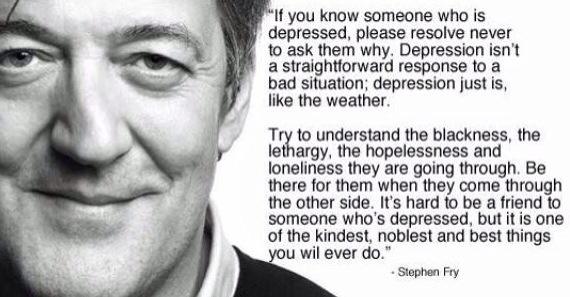
I saw the above from Stephen Fry a few days ago and loved it. It made me think how much I have to thank you for.

  1. Thank you for standing by me when I did things that later I came bitterly to regret. You never said  “I told you so” but you were there to help me pick up the pieces.
  2. Thank you for recognising that we are different, and for not sitting in judgement of me or the paths I choose to take.
  3. Thank you for keeping in touch during times when I “go quiet” and for not seeing my lack of effort as a personal slight or a sign that I am a rubbish friend. Even though I am.
  4. Thank you for listening to me, for only giving advice when I ask for it, and for not minding when I inevitably fail to take it.
  5. Thank you for being worried about me when I have done things to hurt myself, and for reminding me, despite how I sometimes feel, that I am worth caring about.
  6. Thank you for being there to celebrate my successes and for knowing the personal cost of these achievements.
  7. Thank you for the times when I couldn’t speak and you held my hand and told me you would always be there.
  8. Thank you for once sending me a postcard I will always keep which says “Blessed are the cracked, for they let in the light.”
  9. Thank you for understanding my need to be liked and needed, even though you are much more sanguine and self-contained. And thank you for letting me help you sometimes; I am so glad that I can.
  10. Thank you for never asking me why I get depression. Sometimes you know better than I do about why. And sometimes it just happens.

My life is a bit of a roller coaster. It has taken me nearly 60 years to learn that, no matter how much I try, I can’t completely change that, although I am at last learning to recognise my triggers and be kinder to myself and thus to others. You help to make the ups less scary and the downs a tiny bit less grim.

With my love and thanks to you for choosing to become and to stay my funny, kind, wise and very dear friend.

From me xxx

When I’m 94…(to the tune of When I’m 64 by the Beatles)

When the NHS was created in 1948, 64 was considered elderly. Both my grandfathers died during the 1940s aged 50 from what we now know to have been smoking related illnesses, having served in the WW1 trenches. My maternal grandmother died aged 65. My other grandma managed to last a bit longer; she died in December 1982 aged 79. 3 out of 4 died in their own beds at home.

I was born in 1955, a child of the NHS. I have worked in it since aged 18. The NHS was set up to improve the extremely poor health of the nation after World War 2, with clinics providing advice and free milk, vitamins, orange juice and cod liver oil, as well as weighing and measuring children, hearing and eye tests, free dentistry, and checking for lice, nits, scabies and rickets. A mass free screening and vaccination programme began for common killer diseases such as smallpox, diptheria, tetanus, polio and TB. Going to the clinic with my mother and younger brothers was fascinating and memorable. Providing care free at the point of delivery to people who were sick or injured was a massive bonus for the public, but its wasn’t intended to be the main aim of the new NHS.

Despite these wonderful founding principles, the NHS quickly began to increase its focus on treating sickness. The status of hospital medicine has always been greater than public health or primary care; this continues today. Radical health promotion initiatives such as the Peckham Experiment sadly closed down before they had a chance to prove themselves.

I trained as a health visitor in 1978, having been inspired during my hospital nurse training – in 1975 I went out for the day with the local health visitor. As well as admiring her cream Morris Traveller and adorable spaniel puppy, I will never forget one visit. In a tiny cottage in a village outside Cambridge, we called on an elderly lady. I remembered her in hospital after a massive stroke, lying with her face turned to the wall. Back home, despite needing two sticks and very limited speech, she ushered us into her cosy kitchen, all smiles, and made us tea and biscuits while her cat snoozed on the sunny windowsill.

Community services (those outside hospital that either help people to stay healthy or look after them at home when they are ill or dying) and mental health services have always been the Cinderellas of the NHS. Never more so than in the last few years, when they have experienced unprecedented cuts in order for commissioners to continue to pay for increasingly sophisticated physical hospital interventions.

Today I have a lovely gig: joining 100 or so folk from the NHS and social care system in Kent, Surrey and Sussex, all of whom want to improve care for older people. It is organised by the KSS Academic Health Science Network. Life expectancy in Kent, Surrey and Sussex is the highest in the UK. Were it not for pockets of significant deprivation along the Kent and Sussex coast, and the appalling fact that people with serious mental illness live 20 years less than the population average (25 years less than the KSS average), it would be even higher. It is common for acute hospital wards to be entirely populated by people in their mid 90s and above. The people attending the event know things have to change. Medicalising old age is cruel as well as extremely costly.

It is, fortuitously, Dementia Awareness Week and Dying Matters Awareness Week. I know from the research of my brilliant ex-colleague Professor Sube Banerjee that only 18% of people who have dementia only have dementia. The majority have between 2 and 7 other significant health conditions that seriously affect their lives. The way we run the NHS is simply not serving their needs, despite very elderly people being its majority users. I also know from the wonderful work of organisations such Dying Matters that these days, most people die in hospital despite very much preferring to be cared for at home.

Today, we will be encouraging the people at the event to face this enormous challenge together. We have to do things differently. It says so in the Five Year Forward View. The attendees at this event are to some extent, like those involved in the vanguard sites across the country, the converted. But even they will have to throw away beloved ideas and think the unthinkable.

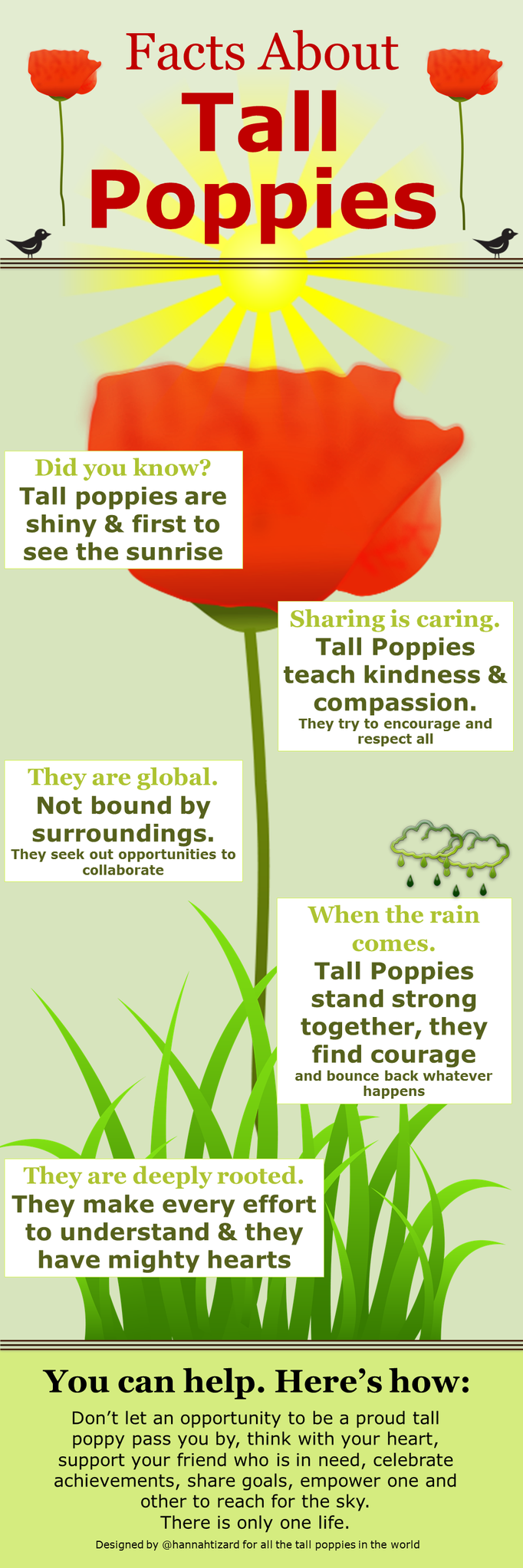
I am indebted to @HannahTizard on Twitter for this lovely infographic about tall poppies.
image

Tall poppies may experience meanness from others because they are full of ideas and are not afraid to challenge the status quo. They are always thinking about how to do things better and are not prepared to accept mediocrity, especially when it harms others.

I will be using this lovely infographic today to encourage the people at the event, who I think of already as tall poppies, and giving them a link to this blog so they have a reference to keep.

I hope you find it helpful too. Please be a tall poppy; challenge the status quo if you think the care you provide or commission isn’t what you think you would want yourself when you are 94 or even older.  And do something right now to start making things better for every elderly person who wants fewer tubes up their bottom and down their throat, and more time to enjoy their latter days with somebody kind to sit with them, help them to have a drink and hold their hand.

Meanwhile, as I intend to live until at least 94, I’m off to read Sod 70! by the indomitable Dr Muir Gray, to help me continue to treat my body hard but well, and How to Age by Anne Karpf, from the School of Life series, to help me manage my (sometimes fragile) psyche and approach old age with equanimity and joy.

Do please join me.

Post script: 11 hours after posting this, I’ve already had lots of feedback. One person feels I’m generalising and that the research quoted doesn’t support my view that older people would prefer to avoid unnecessary investigations. I agree that we must ask people and really listen carefully to their answer before subjecting them to invasive tests. Over 100 seem to like it so far.

I’ve also realised that I’ve been channelling the #HulloOurAimIs campaign from NHS Change Day led by my lovely Twitter and real life chum Alex Silverstein @AlexYLDiabetes. So I wanted to mention it. Alex is the tallest of poppies and despite being less than half my age, has taught me loads. Go Alex and thank you xxx


Are you feeling sad about the election?

The exit polls turned out to be right. And whilst Conservative and Scottish Nationalist supporters are ebullient, I’ve lost count of the number of people who have remarked on social media that they feel really depressed.

For the majority saying this, the feeling they are experiencing isn’t depression in any clinical sense. It is disappointment, sadness and loss. It is a normal grief reaction to something shocking and unexpected, which dashes hopes for the future. And it re-introduces and even expands fears that people who were hoping for a better result for Labour, the Lib Dems, the Greens and even UKIP had overcome, albeit just for a short while.

The five stages of grief model described by Dr Elizabeth Kubler-Ross was not intended to be prescriptive. It was an extremely well-received description of how people who are terminally ill get used to the idea of their own impending death. The stages of grief described are Shock, Denial, Bargaining, Anger, and Depression, better described perhaps as deep sadness. This, in time, leads to Accommodation/Acceptance. Depending on the nature of one’s loss, grief has to run its course. It is possible to get stuck at any stage, and for stages to have to be repeated. Trying to avoid the anger or sadness phases by keeping busy and pretending to be OK can be psychologically damaging; I have form on this myself.

There will be people today who will undoubtedly be at the start of a significant grief cycle, including the 3 party leaders who have resigned, those who have lost their livelihoods, and those closest to them. For the majority of the population, though, the cycle will pass quite quickly.

Some people are already into the angry phase; this is can be when blame gets sprayed about and bad decisions made. It is a time when we are advised not to make big decisions.

It is also important not to get stuck at the anger phase. Those who have learned to attribute responsibility for bad things that happen to them to others can waste huge amounts of energy re-traumatising themselves and failing to realise their own power to effect positive change.

Some people who experience mental illness get annoyed about the misuse of the term depression to describe feelings they see as relatively trivial compared to the self-hatred and hopelessness of clinical depression. I used to be one of them, but these days I am less fussed. As long as people understand that one word can have many meanings, I am more than happy to share it.  But I do want everyone to understand that there are no such things as happy-pills. If you aren’t clinically depressed, anti-depressants won’t make things better. Only you can do that, by getting to know yourself, and being kind and compassionate to yourself and to others.

It is tough advice, but as Maya Angelou said:

If you don’t like something, change it. If you can’t change it, change your attitude. 

The brilliant thing about our democratic system, apart of course from actually having one, is that MPs may only be elected by some of their constituents. But they are there to represent all of them. Occasionally they just need reminding.

I’m consoling myself about the the loss of the rainbow coalition I fondly imagined by thinking how to keep mental health on the agenda of the Conservative government, as they promised us during their election campaign. We have to make the business argument that investment in mental health treatment and support saves money in the long run. As well as the compassionate one about saving lives and making those lives worth living.

It is wonderful that there are millions of us who care enough to do the same.


Dear New Secretary of State for Health

Congratulations on helping to form a rainbow coalition government so quickly, and for your appointment. It is wonderful that a Conservative/Green/LibDem/Labour/National Health Action (delete as appropriate) MP is prepared to set aside political differences and take responsibility for the NHS in England on behalf of us all. What could be more important?

I expect you will get a few suggestions on what to do first. I thought I’d make it easy and send you my list at the earliest opportunity. It contains 5 things.

  1. Pass an Act of Parliament that makes it illegal for any politician to use the NHS as a political football. This will allow you to make plans with all the coalition partners that transcend the short – sightedness of a 5 year parliamentary term. And if it puts the Daily Mail out of business, it will be have the added benefit of improving the nation’s mental well-being.
  2. Appoint a group of well-informed independent thinkers to form your ministerial team. A few suggestions: Dr Sarah Wollaston, Norman Lamb, Dr Caroline Lucas, Liz Kendall, Dr Clive Peedell. They will help you remember the difference between the role of elected members – to set overall strategy and oversee governance – and of professional clinicians and managers, whose job it is to advise on how best to achieve your aims safely and then deliver them for you. Don’t be tempted to get  involved in professional matters such as numbers of hospitals and staff, or specific clinical policies. The most important job for you and your team is the give the experts room to work and keep politics with a big P out of it while they do.
  3. When fighting for the money needed from the Treasury to stabilise and transform the NHS and meet health needs today and for generations to come, think what Nye Bevan would have done if he had been told it couldn’t be afforded. Then do that.
  4. Do what you must to sort out the mess that means that 7 people now do the job of one civil servant who used to run the NHS, and ties the hands of politicians like yourself in bureaucratic loops. Remove the tyranny of competition for competition’s sake. But don’t do a wholesale reorganisation. It is the way we provide NHS services that needs to change, not arcane aspects of structure.
  5. Dump the phrase “parity of esteem”. It has lost all credibility. Instead, allocate funding on the basis of disease burden and the cost of not offering treatment based on the best evidence at the earliest opportunity. This way, children and young people’s mental health services will jump from the bottom of the priority pile to the top, with mental health services for adults of all ages coming a close second. If anyone complains, point out these three facts:
  • Psychosis is like cancer. The earlier it is diagnosed and treated, the better the prognosis and the least likely it is to recur. The same is true for all serious mental illnesses.
  • 75% of mental illnesses start before the age of 18. Like my depression
  • People with serious mental illness die on average 20 years earlier than the rest of the population. From suicide, yes, but more frequently from heart disease, strokes, cancer and the complications of Type 2 diabetes. Putting mental illness first will save money and lives, and make those lives worth living.

The results of the 2015 election show that the public are fed up with media-savvy politicians who speak in sound-bites and put their own interests and those of their well-connected friends before the needs of ordinary people. But it will take us a while to relearn that honourable politicians sometimes make mistakes, that most mistakes only come to light with the benefit of hindsight, and that even the best decisions don’t invariably deliver the expected results. Being a public servant has never been harder. Please take care of yourself; we need you to remain compassionate, committed and to keep telling it to us like it is.

With loving kindness,

Lisa


What I did during National Depression Awareness Week

Now I no longer have a wonderful communications team to keep me briefed, awareness weeks like this one can pass me by. It was serendipity that I saw my GP yesterday and we agreed that I would start the final reduction of my antidepressants prior to stopping them altogether.

There are side effects to reducing modern antidepressants, also known as SSRIs, as well as significant risks. Reduction should be done carefully, with expert supervision. My GP has specialist mental health training and experience, which is also serendipity, as I didn’t know this when I shuffled into her consulting room at an acute stage of my last depression. She listens carefully to her patients, and works closely with us and secondary care staff including my psychiatrist. I am confident that I don’t get special treatment; she is equally compassionate and skilled with everyone. I do know that I am lucky.

It is shocking how many people think that you can go on the internet and become an expert in the treatment of mental illness. Without me asking for their advice, someone suggested that now we know that mindfulness works just as well as antidepressants, maybe I should try that instead? This made me smile to myself. I have given a presentation about the importance of access to mindfulness as a treatment option for anxiety and depression with the report author Professor Willem Kuyken to the Permanent Secretary of the Department of Health, Una O’Brien, and her senior team. So I do know a bit about it. But even so, with my own treatment, I need help.

As my dear friend @BiPolarBlogger said on Twitter, telling someone they should have a go at mindfulness is a bit like telling a person who can’t swim that doing the butterfly stroke is good for you. Such psychological techniques need to be taught with skill and practised regularly. And they are not for everyone. Mindfulness can be increase problems for someone with a trauma-related illness such as PTSD.

Actually, once I got over the hiding-under-the-bed-stage of my last depression, I found mindfulness to be a great help, and I use it most days. Yesterday I looked into a top-up course because, like all exercises of the body or the mind, repetition and building mastery are essential. Which isn’t the same as taking a tablet.

I have to confess to feeling anxious about coming off my little pills. There is something about putting them out before I go to bed, and then taking them on waking in the morning, that helps me remember my own fragility. It is a little daily act of self care. I might forget to floss my teeth, but I have never forgotten to take my medication.

People like me who experience depression have a tendency to be extremely hard on ourselves. I’ve written about this here and here. Medication prescribed by a doctor that you cannot buy over the counter is a reminder that someone who knows what they are doing believes that you need and deserve help – even if you don’t believe it yourself.

As well as upping my game on mindfulness, I am also doing more work (paid and voluntary) and preparing for a gruelling bike ride. And I’ve bought a new book called Reasons to Stay Alive by the wonderful @MattHaig.

Reasons to Stay Alive

Reasons to Stay Alive

And finally, I am using CBT techniques – facing the thing that frightens me and through this, allowing the fear to subside naturally – to help me. My blog is part of this.

Thank you for reading it. I hope it helps you or someone else xxx


Please take care, Twitter can be cruel

I love Twitter. But it can be a cruel place. Personal attacks and even threats of death are not uncommon. Sue Perkins and Jack Monroe are the latest high profile quitters following unrelated horridness – in Sue’s case, she was attacked for being (wrongly) tipped as Jeremy Clarkson’s replacement on Top Gear. Jack’s was about supporting the Greens on the election. Death threats for this? There are no words.

I’m nowhere near their league, but I’ve had my share of online nastiness, and it continues. It can be overwhelming when you are under an onslaught from many directions. And unless you reply and risk even worse, other more measured folk won’t know what’s happening, because the vile stuff won’t appear in their time line.

I am of the “Whatever we wear and wherever we go, Yes means Yes and No means No” generation. I don’t see why bullies should frighten us away from places that belong to us all. But I’m also concerned for my own wellbeing and that of others.

It is good that Twitter are cracking down on abuse – better late than never. Meanwhile, here are my tips for staying emotionally safe and still getting the best from Twitter.

  1. Be yourself but think really carefully about how much you share. Social media is still a relatively new medium. Some are already regretting earlier openness. I’m thinking particularly of people like me who experience mental illness from time to time. Talking with others who have similar experiences really helps, because with diseases of the mind, unchecked irrational thoughts about ourselves can snowball and be really bad for us. But sharing also makes us vulnerable. Only a handful of people have accused me of psychological weakness, attention seeking or of using my depression as an excuse for past failings. Even fewer have defaced my image, called me vile names, and traduced my appearance, intelligence, morals, motivations and career. I have forgiven but I cannot forget their words. On a bad day, I imagine that others may feel the same way about me. On a really bad day, I may even agree with some of this shit. So please, take care.
  2. Be wary of individual tweeters who follow few people themselves. They may say interesting stuff, but they are unlikely to be interested in an online conversation with you. Maybe you don’t mind just reading their views? It’s a good way to start, especially if you are shy. But most of us are on social media because we want to exchange thoughts, share experiences and ideas.
  3. Don’t just follow those you know you will agree with. It might feel cosy to be in a cocoon of like – minded folk, but it won’t stimulate or enlighten. If it weren’t for Twitter, we wouldn’t know the odious extent of the views of, say, Katie Hopkins on people seeking asylum. What better spur to get the previously disaffected to vote than the thought of people like Hopkins (who always vote, by the way – they know their rights) getting more of a say than us non neo-Nazis? We need to know these things.
  4. Take the plunge and join in conversations when you haven’t got a view or are still making up your mind. Some people think that being open – minded, even undecided, is feeble or wishy-washy. I disagree. Just be sure that when you in one of these discussions,  everyone is treated with politeness, including you. Be prepared to walk away if that doesn’t happen.
  5. Join in with conversations that are happening at the time you are actually on Twitter. Prepare yourself so you don’t feel too hurt if people whose views you admire don’t respond. Just move on and chat to someone else. Don’t assume people are being rude; they might be but that really isn’t your problem. Easier said than done when you desperately want a reply, I know!
  6. Try not to get involved in those angry ding-dongs where an increasing number of @names get added, until in the end there is no space to say anything. If you get copied in, these are best ignored, in my experience.
  7. Don’t be heavy – handed with the Block button. Some people collect blocks like trophies, and will proudly list you as a person who lacks empathy along with others you may prefer not to be associated with. And you won’t know about this if you have blocked them. Save blocking for porn sites, annoying bots and people who are genuinely harassing you. And for the latter, do also report them. Twitter are rightly upping their game in dealing with online harassment. If you are being repeatedly harassed by someone, you may also need to check if they have other profiles. In my experience, these are relatively easy to spot. And do also report them to the police. They definitely do take action when serious threats are made.
  8. My thoughts here are aimed at people like me who are able to tweet as individuals. The freedom we enjoy compared to those in public positions cannot be underestimated. I’ve been in one of those jobs, and written about use of Twitter from that perspective here. It is great if such people can share something personal of themselves, but it is a big ask, given what can happen and the impacts. Which leads me to my final point.
  9. Don’t rush to judgement of others. No-one knows what it’s like to sit where they are sitting, other than they themselves. Be kind, always. Never, ever make remarks like James May did recently about those who made death threats towards Sue Perkins. He only made a bad situation worse. If you can’t be kind, walk politely but firmly away.

I’ve blogged in the past about forgiveness. If you haven’t seen it and are interested, here it is.

I’m still practising by the way.


Let’s stop being mean about people who are fat

This is an update on a blog I wrote earlier this year. I’m reprising it because of the fuss this week about Public Health England’s report into obesity and the Prime Minister’s apparent refusal to consider a possible tax on sugar.

Fat-shaming is a recent phenomenon. People who do it include doctors, nurses, NHS managers, politicians, journalists, comedians and ordinary folk like you and me. And it is weird, because according to statistics, over 60% of us in the UK fall into the category of people being vilified for our weak will, stupidity, greediness and for costing a lot of money in unnecessary healthcare.

I write as one who has done it as well as had it done to me.

I always liked the beach

I always liked the beach

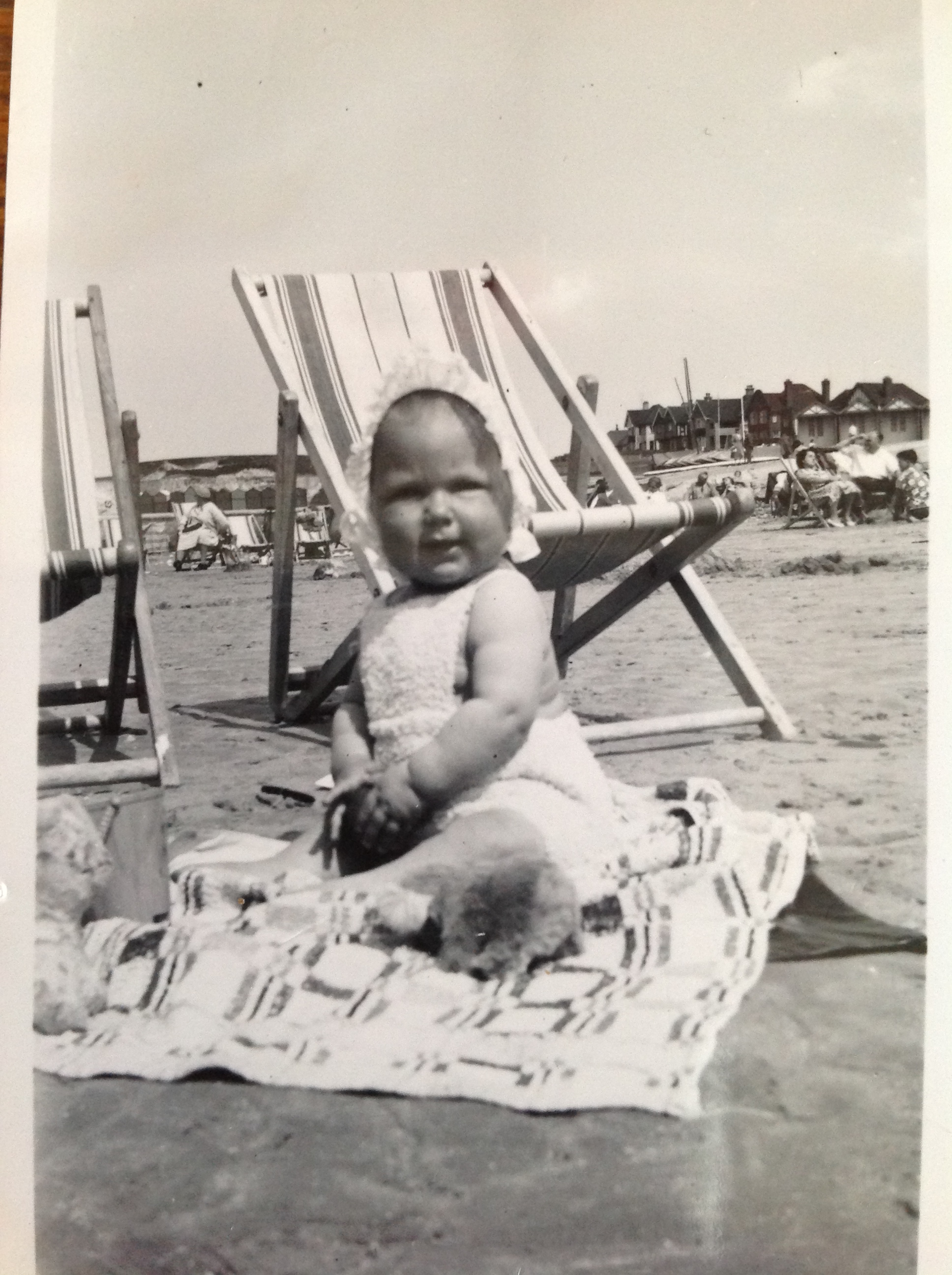
Here’s me as a baby. Fully breastfed, I grew bigger than my tiny mother almost before I could walk. I take after my father. I am robust. I love my food.

Humans are built for survival. Some are wiry and can run fast for long distances. Others have staying power. In an emergency situation, chunky people like me can cope with cold and hunger because we can survive on our fat stores. We are the polar bears and the Arctic seals of the human race.

But our modern Western world has played havoc with these survival characteristics. As long as you have money, food is plentiful. The least nutritious, most fattening sorts of food are often the cheapest. And the combination of sugar, fat and salt in many processed foods such as cakes, biscuits, chocolate, ice-cream, crisps, milkshakes and even bread is, apparently, addictive.

This Ted Talkthis Ted Talk is enlightening. It helped me understand why losing weight is so hard. When you have gained weight, your body quickly adapts to being bigger, and adjusts your metabolism accordingly. Resetting the metabolic rate is extremely difficult. Once you have lost weight, you will probably have to eat fewer calories for the rest of your life to maintain your reduced size, even with regular, vigorous exercise. So you are fighting not only an addiction, but also your own nature.

And there is another factor. Many modern medications, particularly those used to treat various sorts of mental illness, have the unfortunate side effect of increasing one’s appetite. People taking them find they feel hungry all the time, and not surprisingly they eat more. I finished my antidepressants six months ago. Yet I have at least half a stone to shift, and despite extensive motivation and knowledge, it is proving a struggle. I know from chatting to others how distressing it is to gain four or five stone very quickly, with all the disability and stigma that goes with being overweight to add to the burden of the mental illness for which you have to keep taking the medication that leads to the weight gain.

I know people who have been to the doctor and been encouraged to lose weight. And then they buy a newspaper and are told that if they also buy a monster size bar of chocolate (which contains more calories than they need to eat in a whole day but no protein, vitamins or roughage) the newspaper will be free. If it were cigarettes or drugs, we would be horrified.

Given the cost to the NHS of obesity, with its links to heart disease, strokes, Type 2 diabetes, cancer, arthritis and other long-term disabling conditions, not to mention depression, anxiety and agoraphobia linked to body image and self worth, you would think that investing in prevention and effective treatments for obesity would be the place to start.

There is mention of this in the NHS Five Year Forward View. But until this week, there has been no systematic appraisal of the best ways to help people achieve and maintain a healthy weight, nor is there a coordinated, evidence-based commissioning approach to weight-loss and healthy weight maintenance services. Public Health England have produced a report about sugar, but we have learned this week that it has been witheld. Who knows what the real story is about who did this? I don’t really care. I just know that leaving obesity to individuals to tackle is unfair, ineffective and helps mo-one but the commercial giants who sell us all the stuff we don’t need.

Our current attitude to obesity is bizarre. Let’s tackle the food giants who push processed junk food at us from every direction possible. Let’s publish the economic appraisal to prove that helping people rather than criticising and lecturing them would in the end save a lot of money and even more unhappiness.And most of all, let’s stop blaming people for doing what comes naturally.


Ignore Russell Brand and vote for mental health

I start by declaring an interest. I really like The Right Honourable Norman Lamb. He knows his stuff on mental health. His values are sound, and he is an unassuming, witty and extremely kind man. He has also been dealing with distressing family issues and still managed to maintain focus on his job as Minister of State for Care and Support. Senior staff at NHS England such as Professor Sir Bruce Keogh vouch for him “holding our feet to the fire on mental health.”

Yet I became tetchy on reading the Liberal Democratic manifesto mental health promises yesterday. It feels a bit rich that a party that has been in power for a full parliamentary term, albeit as a junior partner in a coalition, should be making promises now after 5 years of not making these things happen.

My supporting evidence:

  • I:4 of us will be mentally ill in any one year, according to the Mental Health Foundation. Yet mental health services are still the poor relation within the NHS family, missing out on new money and bearing the brunt when public sector “efficiencies” are required, as they have been during the last parliament. Under the coalition, this imbalance has grown measurably worse. The funding promises made in yesterday’s Lib Dem manifesto will to some extent redress the balance – but only if they come to fruition.
  • I will need persuasion to believe that we will see this money, given the promises made in 2010 not in the last Lib Dem manifesto, but after the coalition government was formed. I was chairing the Mental Health Network of the NHS Confederation at the time, and was invited to speak at the launch of the coalition’s mental health strategy alongside Mr Lamb’s predecessor Paul Burstow. We felt excited and optimistic that parity of esteem between physical and mental health services was being promised at the start of the new parliament and ahead of any other health announcements. What happened?
  • Children’s mental health services, one of the top priority areas in the manifesto, are in a state of particular crisis. This is because of cuts to local authority funding of front-line services in schools and those provided by the third sector, reductions to NHS community services, substantial increases in referrals linked in part to the downturn but also modern pressures felt by young people. There has been near-chaos in the commissioning of these services arising from changes to the NHS and Social Care Act, which although a Conservative-led initiative which they now admit was a mistake, could have been halted or at least improved by the Lib Dems. One of the most troubling outcomes is that sick children now wait regularly in police cells while desperate clinicians and managers scour the country for a suitable hospital bed. Staff are overwhelmed, and parents are desperate. Given that 75% of mental illnesses start, as mine did, before the age of 18, and that early intervention is now known to make such a difference, this situation is not only cruel, it is also extremely short-sighted.
  • According to W Edwards Deming, if you don’t measure, you can’t manage. Mental health services have been crying out for a commissioning currency so they aren’t expected to respond to infinite levels of demand under open-ended block contracts. They need national benchmarks, targets and some form of payment by results, otherwise bids for increased funding will continue to be trumped by those for diseases such as cancer or heart disease, where there are a wealth of measurements. This was promised by the last Labour government in 2005 and by the coalition in 2010. It appears again in this manifesto; if the Lib Dems help to form the next coalition, will we be third time lucky?

Here are Royal College of Psychiatrists’ President Professor Sir Simon Wessely and Time to Change ambassador Alastair Campbell explaining why in their view, when it comes to mental illness and mental health care and support, government actions speak louder than words.

It’s not just the 1:4 of us who experience mental illness who should carefully consider these promises and those made by each of the other political parties. 4:4 of us will be voting on May 7th, or rather, we have the right to vote that others have died to get for us. This will apparently be the closest election in a lifetime. We have the greatest ever diversity of candidates. If we don’t each exercise our democratic right, we risk allowing those more certain than us about matters as important as mental health to decide who will run the country.

According to pundits, the outcome of the election is likely to be another coalition with at least two parties. This time, whoever forms the new government, I intend to make a fuss right from the beginning about funding and evidence-based support for mental health services. The more of us who do, the more they will realise that we mean business.

The recent dog-whistle headlines about the aircrash co-pilot show that we have a way to go in tackling the stigma of mental illness. So please ignore Russell Brand and vote; being disenfranchised would be really bad for our mental health.


I think we are pretty amazing

I didn’t sleep much last night. I’d agreed to go on the Today programme at 07.40 to give my perspective on this week’s coverage of the terrible plane crash in the Alps, particularly the implications that it was caused by someone with depression.

I only came out about my own experiences of depression a year and a half ago, even though it has come – and gone – since I was 15. I’m not unusual; 75% of mental illnesses start before the age of 18. I’m also not unusual to be shy about sharing. There is still massive stigma. Including self-stigma, in which I am an expert.

Very gradually, things have become easier for the 1:4 people who experience mental illness, through campaigns such as Time to Change. Or so we thought.

I’m not going to repeat how disgracefully the majority of the print and even broadcast media have behaved this week. Others including Matt Haig, my 17 year old Twitter friend Stella and Stephanie Boland have done so much better than me.

And deepest thanks to Paul Farmer, CE of Mind, Sue Baker, Director of Time to Change and Professor Sir Simon Wessely, President of the Royal College of Psychiatrists for being so quick off the mark and setting the record straight. They have done a stunning job.

What I want to say is that, every time I have an opportunity to speak about the stigma that still affects people like me, I feel a little more nervous. It is an increasingly heavy burden of responsibility. For some, the impact of their mental illness means they lack the voice and opportunity to speak for themselves. They have to rely on others. And that means those of us who can must act with great sensitivity and respect. Including towards those who have lost someone to suicide, anorexia or lack of self-care.

Mental illnesses, by definition, mess with your head. They make you believe horrible, negative things about yourself, question your worth and the very point of your existence, and cause you to feel hopeless about the future. In some cases, people lose touch with reality. They hurt themselves, either deliberately or by failing to take due care. It is rare that they hurt other people. Far more rare than people who are NOT mentally ill hurting others.

There are other illnesses that carry stigma, but mental illnesses are in a class of their own. The media coverage this week may have set matters back.

But what gives me hope is that after speaking on the radio, I have heard from hundreds of people I didn’t previously know via social media. Many are like me, timidly but courageously speaking up about their own experiences in order to encourage people who are ashamed of their mental illness to seek help.

Together, we can metaphorically hold hands, step forward together and show that we aren’t murderous monsters. And that, with love, support and most of all our own courage, we can make a creative and compassionate contribution to the world.

Thank you to all my old and new friends. I think we are pretty amazing.