courage

Cock-up or conspiracy?

Blogging can be addictive. I try to limit myself to one a week. But after the Secretary of State announced yesterday that a pay “settlement” will now be imposed on junior doctors, given that extended negotiations have so far failed to reach a conclusion satisfactory to all parties, I feel I have something to say.

I know many junior doctors, including the daughters and sons of friends plus those I meet directly through ongoing contact with the NHS. These young people, who hold other people’s lives in their hands on a daily basis, are sensible, bright, compassionate, committed and driven. I don’t understand how a Secretary of State who was brought in to settle down the NHS after the mess the previous one created can have allowed himself to get into an intractable dispute with so popular and articulate a group of NHS staff.

But nor do I buy into conspiracy theories about privatisation by stealth; there would be better ways to achieve this than by alienating an essential section of the workforce. It is far more likely to be a cock-up. Someone probably advised him that the existing contract was, as most senior NHS managers including senior doctors know, overly complicated and no longer fit for purpose. (If indeed it ever was. This is not the fault of the junior doctors, by the way.)

And so he decided to immortalise his legacy as a moderniser by spearheading the introduction of a new contract. But because he isn’t a manager himself, he set out without understanding that the only way to change the contracts of any group of public sector staff, especially doctors who have possibly the most effective union in the country to negotiate for them, is to improve on their current terms and conditions. There is nothing that upsets people more than attempts to introduce changes that significantly worsen their position. And at the heart of the dispute is the fact that for everyone else in the NHS, Saturdays are not part of the core working week. And although there is little choice for the majority but to work on at least some Saturdays, doing so incurs additional payment. (That people in shops and restaurants don’t get paid extra for working on Saturdays these days is of no relevance.)

The Secretary of State also fell into a communications trap by talking about a 7-day NHS, when the group he was targeting already work shifts across 7 days. He chose the wrong example. To get a true 7-day service, he needs to persuade all other NHS staff who don’t already do so to work shifts over 7 days. And to find considerably more of them because spreading 5 across 7 just makes a thinner spread. And that would cost a great deal of money, which he doesn’t have.

What I know from my junior doctor friends is just how difficult it is to get onto a training programme that takes account of personal circumstances. These young people are already in their mid – late 20s. They have slogged away for 10 years plus to get to where they are now. Only the most elite get the pick of training jobs in university teaching trusts; everyone else is bundled around the country with little choice on short placements that have to be filled, because they are the medical workhorses of our NHS. This plays havoc with personal relationships and family life. So they are not a group for whom losing what little control they had over their Saturdays was ever likely to go down well.

With all this in mind, chief executives of trusts work to a bottom line, which is to deliver safe services within the money available. And 20 of them have found themselves in an invidious position.  These 20 were asked whether the latest offer being made was, in their opinion given the circumstances, fair and reasonable. Having replied in most cases that on balance, they felt that it was, they found their names being included in a letter from the chief negotiator to the Secretary of State in support of something about which they had not been asked, ie an imposed settlement. For the sake of the point I want to make next, it doesn’t matter whether this was a cock-up or conspiracy. (I suspect cock-up, because they are far more common. And we humans make mistakes.) The letter caused a massive flurry on social media. And these people had to decide whether to keep quiet, incurring the wrath of their own junior medical staff and others who support the doctors, or come out and say that they had not agreed to the imposition, potentially putting their own careers at risk. That the majority did the latter fills my heart with hope for the NHS.

And my key point is this. To be a leader in today’s challenging NHS, there are seldom going to be obvious right answers. You will frequently be faced with dilemmas of this nature. If you don’t have the nous to work out when to put your head above the parapet and when to stay quiet, plus the courage to do the former at the very time it seems most lethal to do so, you haven’t got what it takes.

In other news, the Head of Google, Europe told the Public Accounts Committee yesterday that he couldn’t remember how much his own remuneration package was. Either he really couldn’t, in which case he is an idiot and has no right to be in charge of anything. Or he dissembled because he knew it to be a sum of many millions, embarrassing with Google under fire for paying so little corporation tax. Chief Executives of trusts have their salaries published every year and get pilloried for it in newspapers like the Daily Mail. And they all know exactly how much they earn, which is a tiny fraction of the forgetful man from Google. And yet each carries many times more responsibility than he would have a clue how to handle.

My worry is that there is a scarcity of people with the right attributes and courage to do these NHS leadership jobs. And we really, really need them. As we do our wonderful junior doctors.
A bit of courage

The more worried I feel about expressing my views on a particular topic, the more interest a blog seems to generate.

I’ve written this in anticipation of the Mental Health Taskforce Report, finally due out next week. Although, I’m unsure what you’ll think, I feel the need to say some things I could not have said when I was doing my old job running mental health services.

  1. Mental health services are undoubtedly scary. But they are not all the same. The atmosphere and standard of care even on different wards in the same hospital can vary widely. It depends on the expertise and most of all the compassion of the doctors, nurses and the people in charge. If you have had a poor experience of care, either as a patient or a family member, that is terrible. It is vital that we face the fact that 1 in 3 people say they experience stigma within services. The Time to Change project I’ve been chairing addresses this, with more to report later this month. But at the same time, we must do all we can not to terrify people who need treatment. The chances are they will receive care that will really help. And if they start out assuming the worst, it will be even harder for the staff working with them to establish a therapeutic relationship. And this is the most valuable treatment tool available. I know this from personal experience.
  2. The standard and availability of care in mental health services also depends on the attitudes and expertise of those running and commissioning these services. There is a real and present danger that, faced with wicked choices of saving vast sums of money from the NHS, commissioners look to make savings which will cause the the least outcry, ie from mental health. This isn’t an opinion, by the way. It is a fact. In particular, they look at most expensive care, which happens to be in hospitals, and persuade themselves that the local population can do without most or even all of it. But they can’t. To try to “re-engineer” aka cut beds without careful testing and sustained investment in evidence-based alternatives is irresponsible and dangerous. And yet this is exactly what has been done and continues to be done all over the country right now. Lord Crisp’s report into the availability of acute mental hospital beds published yesterday laid the facts bare. It was a good start. And the access targets it proposes will help. But we still have a long battle to rid ourselves of stigma towards mental health services not only from society but also from the rest of the NHS.
  3. Alcoholism and misuse of drugs are symptoms of mental distress and/or of underlying mental illness. To treat them simply as addictions is cruel and pointless. It may seem cheaper in the short term to separate such services from the NHS and employ unqualified staff to provide care. And it may be politically attractive to take a punitive, non-therapeutic approach to those who self medicate with alcohol or illegal drugs. But to do so condemns vulnerable people to a half life of pain and a premature, horrible death.
  4. There are millions of treatments available for physical illnesses. The same is so for mental illnesses. But why is it that people think they have a right to comment on the treatment of others who are mentally ill in a way they would be unlikely to do for, say, diabetes or heart disease? It’s true that psychiatry and psychology are inexact sciences. This is why they take more expertise, humanity and humility than the other disciplines of medicine. So if you feel tempted to comment on someone else’s treatment, unless you are their trusted clinician, please don’t.
  5. There is no hierarchy of mental illnesses, and no patients who are more “deserving” than others. People who experience psychosis don’t deserve more pity than those who have bipolar disorder, or vice versa. And a short bout of clinical depression can be just as fatal as anorexia nervosa. Please remember this and put away your judgements.
  6. You can’t see mental illness. And that’s part of the cruelty. Getting up and going to a cheap cafe to spend the day with others who understand the challenges of mental illness might sound easy to you. If you feel inclined to bang on about the value of work to those for whom the thought of being compelled to attend a job interview causes them to seriously consider jumping under a train, please shut up. Just because some people don’t get sympathy from tabloid newspapers doesn’t make them any less of a human being than you.
  7. I’ve no problem with the use of words like bravery to refer to those experiencing cancer. And I know from friends with cancer that they have no choice but to be brave. But can we please recognise the courage, guts and determination of those who experience life with mental illness? And can we stop talking about suffering, because it implies passivity and weakness. The one thing I know about every person I have ever met who lives with a mental illness is that they are anything but weak. They are creative and heroic, in ways those who’ve never faced a life such as theirs can only imagine.

People who live with mental illness should be applauded and lionized. Not criticised, preached at, commented on, misunderstood and shunned. I hope next week’s taskforce report will recognise this.

Go us. Thank you.

How do you feel today?

IMG_go72yj

They say you should do something scary every day. I’m not sure. Although I do know that I need the occasional exhilaration of putting myself in an uncomfortable position and overcoming my nerves to make me feel fully alive. Such opportunities came along a bit too frequently when I was a chief executive. But these days I probably don’t scare myself often enough.

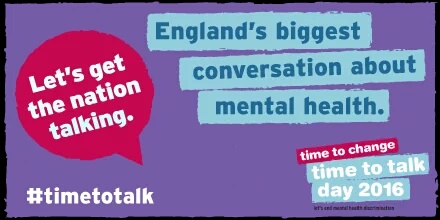
Today is the annual Time To Change #TimeToTalk day. Last night, the choir I recently joined held an open mike session. And I decided to terrify myself at the last minute by offering to do a turn.

Although I can follow a tune and love to sing, I am not like the other wonderful acts that got up and entertained us. I have no special musical talent. But I can talk about stuff.

So I found myself standing there and explaining to a packed pub why I had decided to join the choir. Which is that singing with other people is really good for me. Since school choir days, I have yearned to sing again in a choir. I am full of wonder at being part of something greater than myself. I love having to concentrate really hard in order to follow the music. It moves me when a piece we have faltered over suddenly comes together in glorious harmony. Singing with others of a much higher standard helps me to raise my own game. It feels visceral yet sublime.

And I told them about my history of anxiety and depression, and the impact it has had on me, off and on, over 45 years since I was 15. I talked about stigma, including self stigma. And I told them them that I knew I wasn’t alone, because at least 1:4 people in that pub were like me, possibly more. I told about the research of the positive impact of singing on mental well-being.

And then I asked them to join me and celebrate Time to Talk Day by talking to someone else about mental health.

How did it go? Well, I was nervous of course. But they were lovely. I got clapped and cheered. There were a few tears. And some lovely conversations later. I shouldn’t really have expected anything else. The choir is amazing and our conductor MJ is not only a multi-talented musician. She is also an inspiring, compassionate leader. She gets the best from all of us, as singers but also humans.

If you have experienced mental illness but feel shy about telling people in case they judge you, maybe you could do something scary today? Please think about taking the plunge and talking to someone about it, what you do to cope but also how it is only one thing about you. Talk to a colleague, a friend or just someone you happen to bump into. Use Time to Talk Day as your excuse. And ask them about their own mental health. Listen really carefully to what they say. I think you will be pleasantly surprised by your conversation.

And how do I feel today? I think you can probably guess :):):)

Hello, my name is Lisa

We all have days that are hard. When what we need to do seems insurmountable, when we wonder whether anyone knows or cares about our efforts, and when we question our own plans, motivations and abilities.

As a writer and mental health campaigner who experiences depression from time to time, such days come along not infrequently. They also go away again, but only if I find ways to work through the negative feelings that beset me. To keep on keeping on, as Bob Dylan called it.

To do this, I deploy various methods. One of my favourites is to summon someone I admire, and imagine them watching me. Or I ask myself what they might do if they were in my position. It doesn’t make depression go away, of course, but it helps me face up to the difficult stuff.

It is a great honour to have met one of the people who, without knowing it, helps me on occasions to get over myself. And to have done so back in June 2014 when she spoke at the NHS Confederation Conference about the campaign she started which snowballed into the social movement Hello My Name Is.

I am of course talking about the indomitable, courageous and wise Dr Kate Granger, who has terminal cancer and yet as well as Hello My Name Is has managed to complete her medical training to become a consultant physician, get an MBE, bake amazing cakes, play the flute and tick off more things from her bucket list than most of us manage in many years longer than she knows she probably has.

In a tweet earlier this week to Kate’s husband Chris Pointon, who I haven’t met but I know must be a wonderful man because Kate wouldn’t have married anyone who wasn’t, I said I would write about why Hello My Name Is immediately struck a chord with me. This is it.

In my old life as an NHS mental health trust chief executive, I grew to learn that values mattered many times more than strategy. And that these needed to be simply stated, oft repeated and regularly practised by me and all our staff. We had five.

  • We welcome you – because first impressions really matter
  • We hear you – listening really carefully
  • We are helpful – being pro-active, flexible, creative
  • We work with you – sticking with people through the difficult times
  • We are hopeful – being optimistic for people – staff and patients – and our services

I love these values. You can find out how we developed them when eventually you read the book I have almost finished (hint). For now, I’d just ask that you notice the first one, We welcome you. It links closely with Hello My Name Is. And with name badges.

Name badges really matter in mental health and related services. Because patients can be confused or experience hallucinations. Because services can be scary, for real or imagined reasons. And because no-one wears a uniform so you really can’t tell who is who. And you need to know.

So when I first became CE, the executive team agreed that we would always wear badges and that all our staff would always wear badges, as these would help us to introduce ourselves to each other and to patients. And then however stressed or forgetful someone was and however many people they met, they would always know who the other person was.

During my time as a CE, for the most part, people wore their badges with pride. But not always. You’ll have to wait for my book to hear some of the excuses I came across during 13 years on why staff, including extremely senior ones, were not wearing a name badge. And why I take ultimate responsibility for this.

But what I will tell you is how, back in early 2014 when Hello My Name Is was beginning to gain traction,  I wrote about it in my weekly blog, and asked our people to think about incorporating it as part of We Welcome You. And I got some really nice responses. But also one or two dusty ones. Including from one senior person who said that they were deeply insulted that I was suggesting such a thing, because of course they always introduced themselves to their patients and didn’t I have something more important to write about. This wasn’t the same person who had previously told me that they didn’t need a name badge because everyone knew who they were and anyway they didn’t work in Tesco. But it could have been.

I believe that people like this are, at heart, good and caring and that they are not untypical in any part of the NHS. But they have some way to go to understand that the Hello My Name Is campaign is about seeing the patient and not just their disease, and about bringing your whole compassionate self to work, rather than just your intellectual self.

Kate, your inspirational campaign is still very much needed. It will remain topical and relevant for many years to come. You have set a standard for how we work together to which we can all aspire. You are a shining beacon whose work will live on long after we are all gone.

Hullo, my name is Lisa. Thank you for inspiring me on my difficult days to keep on keeping on.